

What Should a Child Learn in Preschool: A Complete Guide for Parents

Dennis Y
Choosing the right preschool for your child is one of the most important decisions you'll make as a parent. But what exactly should a child learn in preschool? The preschool years, typically between ages three and five, are a time of rapid growth where children develop the foundation for all future learning. Understanding what happens during these years can help you support your child's development at home and know what to look for in a quality early years setting.
The Early Years Foundation Stage Framework
In the UK, preschools and nurseries follow the Early Years Foundation Stage (EYFS) framework, which outlines seven areas of learning and development for children from birth to age five. This framework ensures that all children receive a consistent, high-quality foundation for their future education.
The EYFS divides learning into three prime areas and four specific areas. The prime areas form the building blocks for everything else your child will learn.
Prime Areas of Learning
Personal, Social and Emotional Development
This area focuses on helping children understand their own feelings and the feelings of others. At Little Mowgli Nursery, we see children develop self-regulation skills, learning to manage their behaviour in different situations. They build confidence and resilience when trying new things, and they develop the self-care skills needed for independence, such as eating, toileting and getting dressed.
Children learn to form positive relationships with both adults and peers. They practice taking turns, sharing toys and working alongside others. These skills might seem simple, but they're building the foundation for healthy relationships throughout life.
Communication and Language
Language development happens at an incredible pace during the preschool years. Children learn to listen and respond to what they hear, whether that's following instructions or engaging in conversations. They develop the ability to maintain attention when listening to a story or participating in an activity.
Speaking skills also flourish during this time. Children move from simple words to complex sentences, learning to express their thoughts, needs and feelings clearly. They ask endless questions (the famous "why" phase), which shows their growing curiosity about the world around them.
Physical Development
Physical development includes both gross motor skills (large movements like running, jumping and climbing) and fine motor skills (smaller movements like drawing, writing and using scissors).
Gross motor skills develop through outdoor play and physical activities. Children learn to navigate space safely, balance, coordinate their movements and control their bodies. Fine motor skills develop through activities like drawing, painting, cutting and eventually writing. These skills are essential for later tasks like holding a pencil correctly and forming letters.
Specific Areas of Learning
Literacy
Early literacy isn't about teaching three-year-olds to read novels. It's about building the skills that will make reading and writing possible later on. Children develop phonological awareness, learning to hear and manipulate sounds in words. They begin to recognise letters and understand that print carries meaning.
At Little Mowgli Nursery, children are exposed to books, stories and print in natural, engaging ways. They make marks with various tools, which gradually becomes more controlled and purposeful. By the time they leave preschool, many children can recognise their own name and write some letters.
Mathematics
Early numeracy goes far beyond simply counting to ten. Children develop number sense, understanding what numbers represent and how they relate to quantities. They learn one-to-one correspondence (one object corresponds to one number word), which is a fundamental concept.
Children also explore patterns, shapes, sizes and measurements through play and hands-on activities. They might sort objects by colour or size, build towers and compare heights, or explore containers of different capacities during water play.
Understanding the World
This area helps children make sense of their physical world and their community. They learn about the natural world through observation and exploration, noticing changes in seasons, watching plants grow and observing animals.
Children also develop an understanding of past and present, beginning to grasp that things were different in the past. They explore different people, cultures and communities, learning that people have diverse beliefs, customs and traditions.
Expressive Arts and Design
Creative expression allows children to explore their imagination and develop their own ideas. They experiment with different materials, tools and techniques in art, music, movement and role play.
Through creative activities, children learn to express their thoughts and feelings in different ways. They might paint a picture, build something with blocks, create a song or act out a story. These experiences help develop problem-solving skills, creativity and confidence.
Social and Emotional Skills: The Foundation of Everything
While academic skills like counting and letter recognition are important, social and emotional development forms the foundation for all learning. Research shows that children with strong social-emotional skills are more likely to succeed academically, have better mental health and form positive relationships.
During the preschool years, children learn to identify and talk about emotions. They might say "I'm feeling sad" or recognise when a friend looks upset. This emotional literacy helps them understand their own experiences and empathise with others.
Children also develop self-regulation, the ability to manage their emotions and behaviour. A three-year-old might have frequent tantrums, but by age five, most children can use strategies like deep breathing or asking for help when they feel overwhelmed.
Sharing and turn-taking are major achievements during these years. While toddlers struggle to share, preschoolers gradually learn that they can take turns with a toy and still get another chance to play with it later. They learn to ask politely instead of grabbing, and to negotiate and compromise with peers.
How Children Learn Best in Preschool
Children don't learn through worksheets and formal lessons at this age. They learn through play, exploration and first-hand experiences. Play-based learning might look like "just playing," but it's actually how young children make sense of their world.
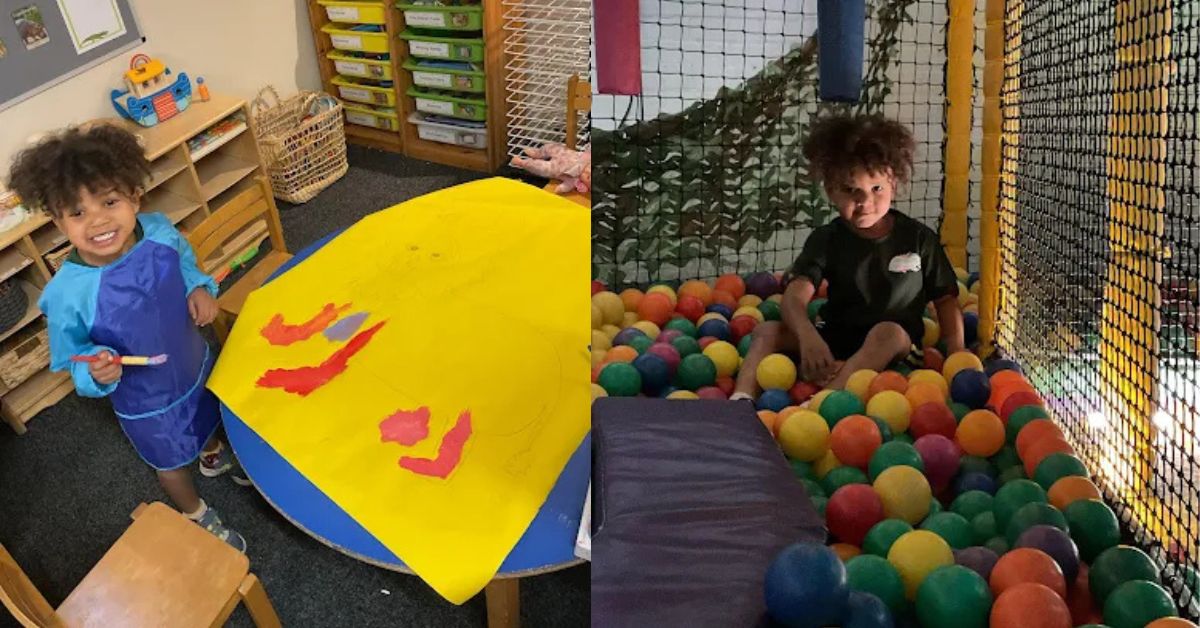
When children build with blocks, they're learning about shapes, balance, spatial relationships and problem-solving. When they play in the home corner, they're developing language, social skills and imagination. When they paint or draw, they're developing fine motor control and creative expression.
Quality preschools like Little Mowgli Nursery create environments where children can explore safely, try new things and learn through hands-on activities. The role of adults is to observe, support and extend children's learning through thoughtful interactions and well-planned activities.
The Importance of Outdoor Learning
Time spent outdoors is essential for children's development, and not just in good weather. Outdoor play supports physical development, allowing children to run, climb, jump and develop their gross motor skills. It also benefits mental wellbeing, reducing stress and promoting positive emotions.
Nature provides endless opportunities for learning. Children can observe minibeasts, collect leaves, watch clouds, jump in puddles and explore different textures. These experiences develop curiosity, observation skills and a connection with the natural world.
Many preschools, including Little Mowgli Nursery, prioritise outdoor learning and ensure children have daily access to outdoor spaces regardless of the weather. Children who spend time outdoors in all conditions develop resilience and learn to dress appropriately for different weather.
Supporting Your Child's Learning at Home
Parents and carers play a vital role in supporting their child's development. Here are some ways to support what your child learns in preschool:
- Talk, talk, talk. Have conversations with your child about anything and everything. Describe what you're doing, ask open-ended questions and listen to their responses. Rich language experiences at home support all areas of development.
- Read together daily. Reading stories exposes children to new vocabulary, develops listening skills and builds a love of books. Let your child choose books that interest them and make it an enjoyable, cosy experience rather than a lesson.
- Count in everyday situations. Count steps as you climb them, pieces of fruit in a bowl or toys being tidied away. This helps children understand that numbers represent real quantities.
- Encourage independence. Let your child do things for themselves, even if it takes longer. Putting on shoes, washing hands and tidying up toys all build confidence and self-care skills.
- Play together. Follow your child's lead in play. Whether it's building, drawing, pretending or playing games, your involvement shows them their interests matter and provides opportunities to extend their learning.
- Support emotional development. Help your child name their feelings and validate their emotions. When they're upset, you might say "You're feeling frustrated because you wanted to stay at the park longer. It's hard to leave when you're having fun."
What to Look for in a Quality Preschool
When choosing a preschool, look for an environment where children are happy, engaged and supported. Staff should be warm, attentive and responsive to children's needs. The setting should offer a balance of child-led play and adult-guided activities.
Look for a rich learning environment with a variety of materials and resources that spark curiosity and creativity. There should be opportunities for both indoor and outdoor play, with space for physical activity and quieter areas for focused activities.
Ask about how the setting follows the EYFS framework and how they support children's development across all seven areas of learning. A quality preschool will be able to explain their approach and share examples of how they help children learn through play.
Little Mowgli Nursery, located in Leyland, welcomes children from as young as three months old. With dedicated rooms for different age groups and a focus on nature-inspired learning, the nursery provides a nurturing environment where each child is treated as an individual and supported to develop at their own pace.
Preparing for School Readiness
School readiness doesn't mean your child needs to read, write and do maths before they start school. True school readiness is about having the social, emotional and physical skills to thrive in a school environment.
A school-ready child can separate from their parents confidently, follow simple instructions, manage their own belongings and use the toilet independently. They can sit and listen to a story, take turns in games and ask for help when they need it. They have some self-regulation skills and can manage their emotions with support.
These skills develop naturally through quality preschool experiences. By focusing on the whole child rather than just academic skills, preschools prepare children for the social and emotional demands of school as well as the learning that will happen there.
Common Concerns and Questions
My child doesn't seem interested in learning letters. Should I be worried?
Children develop at different rates, and some show interest in letters earlier than others. The best approach is to follow your child's lead and make learning playful rather than pressured. If they love dinosaurs, you could point out that dinosaur starts with 'd'. If they're interested in writing their name, support that interest. Avoid turning it into a chore.
My child struggles with sharing. Is this normal?
Completely normal. Sharing is a complex social skill that develops over time. Three-year-olds are just beginning to understand the concept, while four and five-year-olds become more capable of sharing and taking turns. Support their development by praising attempts to share, modelling sharing yourself and providing opportunities to practice in low-pressure situations.
Should I teach my child to read before they start school?
There's no need to formally teach reading before school. What's more helpful is building the foundation for reading: a love of books, good listening skills, phonological awareness (playing with sounds in words) and understanding that print has meaning. These emerge naturally through stories, songs, rhymes and conversations.
How much should my preschooler know before starting reception?
Schools don't expect children to arrive with formal academic skills. They value children who are confident, independent, curious and socially ready for school. Focus on helping your child develop self-care skills, the ability to follow instructions, basic social skills and a positive attitude towards learning.
What if my child has additional needs?
Quality preschools support all children, including those with special educational needs and disabilities. The EYFS framework is designed to be inclusive and flexible. Speak to your preschool about any concerns or additional support your child might need. Early identification and support can make a significant difference.
The Long-Term Benefits of Quality Preschool
Research consistently shows that quality early years experiences have lasting benefits. Children who attend good preschools show better outcomes in language development, social skills and school readiness. These benefits extend beyond the early years, with studies finding links to better academic achievement, higher self-esteem and improved life outcomes in adulthood.
Quality preschool experiences help close the gap for children from disadvantaged backgrounds, providing enriching experiences that support development. They also help all children develop the love of learning, curiosity and confidence that will serve them throughout their education and life.
FAQs
What age should my child start preschool?
Most children start preschool between ages three and four, but some settings accept children from younger ages. At Little Mowgli Nursery, children can start from three months old. The right age depends on your child's readiness and your family's needs. Look for signs that your child is ready, such as showing interest in other children, being able to separate from you for short periods and having some independence with self-care tasks.
How many hours should my preschooler attend per week?
This varies based on family needs and the child's readiness. Many children start with two or three short sessions per week and gradually increase. The government provides 15 hours of funded childcare for eligible three and four-year-olds. Research suggests that attending preschool for around 15-20 hours per week provides good benefits without overwhelming young children. Some children thrive with more hours, while others do better with fewer sessions.
What's the difference between nursery and preschool?
The terms are often used interchangeably in the UK. Both provide early years education following the EYFS framework. Nurseries sometimes cater to younger children (from babies) and may offer longer hours to support working parents, while preschools traditionally focus on three to five-year-olds. The quality of education and care matters more than the name. Always visit settings and ask about their approach to learning and development.
How can I tell if my child is making progress at preschool?
Quality preschools provide regular updates about your child's development across all areas of learning. You might receive a learning journal with photos and observations, attend parent meetings or receive informal updates at pickup time. Look for signs like your child talking about their day, showing new skills at home, forming friendships and being happy to attend. If you have concerns about your child's progress, speak to their key person.
What should my child bring to preschool each day?
Most preschools require a change of clothes (accidents happen), appropriate outdoor clothing (coat, wellies, sun hat depending on season) and any comfort items your child might need. Some settings provide meals and snacks, while others ask parents to send packed lunches. Check with your specific preschool about their requirements. Clearly label all items with your child's name to avoid mix-ups.
Leyland, PR25 2DY

.svg)